Wuhan: A City Best Experienced Through Breakfast
When most people hear the word “Wuhan,” their minds don’t immediately go to bowls of sesame-coated noodles, sizzling pans of dumplings, or the steamy chaos of a breakfast street where vendors are shouting orders before the sun is fully up. Instead, they picture headlines. They imagine a place they don’t quite understand.
That was my mindset too, at first. Before I ever set foot in Wuhan, I thought of it as a city overshadowed by events. But then I went there. And then I went back. And now I’m preparing to go again. And let me tell you: when you’re actually there, walking its riverfront, sitting at a small table on the sidewalk, slurping down noodles while locals smile at you with curiosity and warmth, the old associations fade fast.
Because Wuhan isn’t defined by fear. Wuhan is defined by food.
And not just any food — breakfast.
This is a city that wakes up hungry. Wuhan doesn’t tiptoe into its mornings with a coffee and a croissant. It roars awake with sesame paste, chilies, garlic, steaming bowls, frying pans, and queues of people crowding into tiny shops to get their first meal of the day. If Paris is for lovers and New York is for night owls, Wuhan is for breakfast believers.
The Buzz of a Wuhan Morning
The first time I truly understood Wuhan’s relationship with breakfast was last fall. I stepped out of my hotel in the early morning, expecting quiet streets and a slow start. What I found instead was energy. Lines outside noodle shops. The smell of fried dough wafting through the air. Vendors ladling steaming soy milk into cups.
Wuhan mornings are alive in a way that feels communal. Everybody eats out. Families, workers, students, retirees — they’re all in the same shops, sitting shoulder to shoulder, laughing, slurping, eating fast before moving on with the day. There’s no stigma about grabbing breakfast on the go, no sense of “guilty pleasure.” It’s simply the way life is done here.
Hot Dry Noodles: The Soul of Wuhan
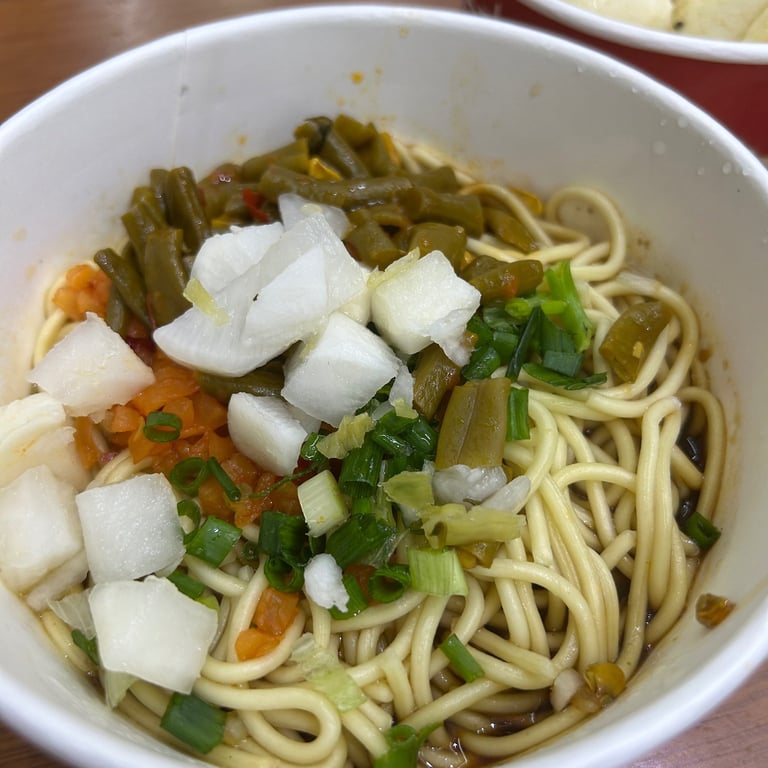
At the center of this culture is re gan mian — hot dry noodles. If you only try one dish in Wuhan, it has to be this. Imagine alkaline noodles, springy and chewy, coated in a thick sesame paste that clings to every strand. Add soy sauce, chili oil, and pickled vegetables for tang. The result is a bowl that’s creamy, spicy, nutty, and deeply satisfying.
But the taste is only half the story. The real magic lies in the ritual. Shops serve these noodles at lightning speed. You order, you pay, you grab a seat, and within seconds a steaming bowl is in front of you. People eat quickly, chopsticks flying, heads bent, before hurrying off to work or school.
Watching this in action, I realized something: breakfast here isn’t just about food. It’s about rhythm. It’s how the city hums in unison.
A City of Snacks That Feel Like Meals
Of course, hot dry noodles aren’t alone. Wuhan is famous for its morning variety.
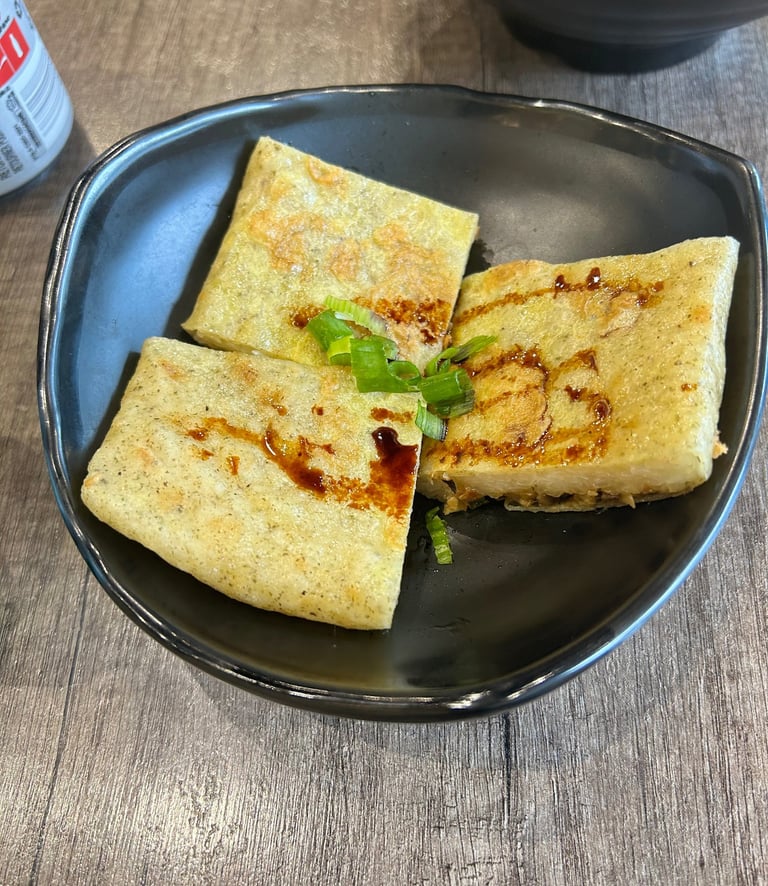
There’s doupi, a layered rice pancake stuffed with sticky rice, minced meat, and mushrooms, then pan-fried until crisp. There are bowls of soy milk and sticks of youtiao (fried dough) for dunking. There are steamed buns stuffed with pork, beef, or vegetables, little parcels of warmth you can eat in two bites.
Breakfast in Wuhan is abundant, but it’s also affordable. For the price of a latte in the West, you can try three or four different dishes. That means you don’t have to choose — you can eat like a sampler of the city every morning.
And locals do. People don’t cling to one “signature breakfast spot.” Instead, they hop from shop to shop, chasing the best noodles, the crispiest doupi, the fluffiest buns. It’s like being part of a food carnival before 9 a.m.
Hospitality Served With Every Bowl
One of the things that touched me most during my time in Wuhan was how meals always came with kindness.
There’s a tradition in China of pouring tea for others before filling your own cup. In Wuhan, I experienced that multiplied by ten. Strangers noticed I was foreign and curious. They’d smile, sometimes offer me a taste of whatever was on their plate, or tell me (in gestures and broken English) which shop nearby had the best buns.
Photo reference: the second photo of steamed fish captures this spirit. It wasn’t a solo dish. It was placed in the middle of the table, shared by everyone, with pieces lifted onto my plate by friends who insisted I take the best bites.
Food in Wuhan is always communal. Always shared. Always an act of generosity.
Safety, Cleanliness, and Surprising Calm
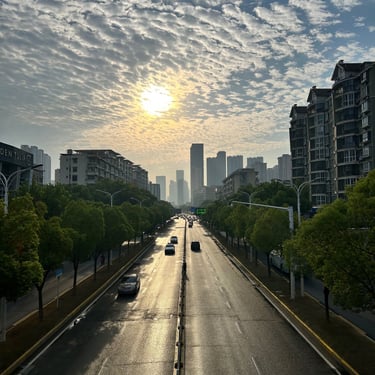
Now let me say this: Wuhan is clean. In fact, it’s one of the cleanest cities I’ve been to in China. Streets are swept, public spaces are well kept, and the riverfront area feels open and inviting.
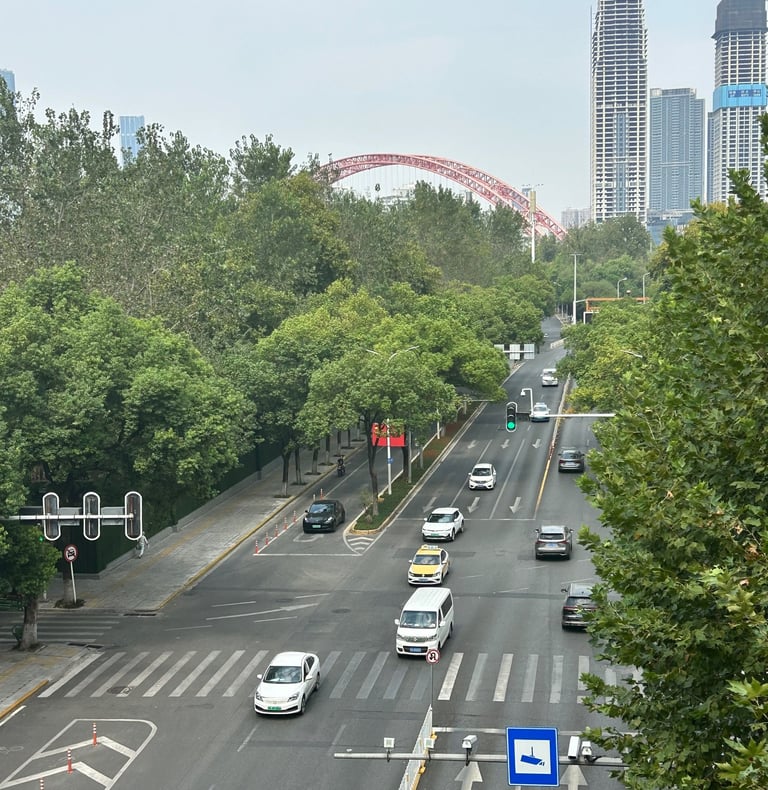
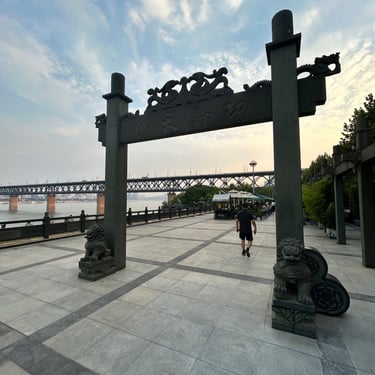
Photo reference: the picture of the riverside arch with the bridge behind it shows exactly what I mean. Wide pedestrian areas, clear tiles, a sense of space. It’s not chaotic or dirty. It’s calm, orderly, and almost elegant.
And it’s safe. Walking alone, even late at night, I never once felt threatened. Instead, I felt included. There’s a kind of gentle politeness in Wuhan that you notice when people step aside to let you pass, or when someone at a food stall patiently waits while you struggle to order with gestures.
Midday and Evening: More Feasts Await
While breakfast is Wuhan’s beating heart, the rest of the day isn’t lacking either.
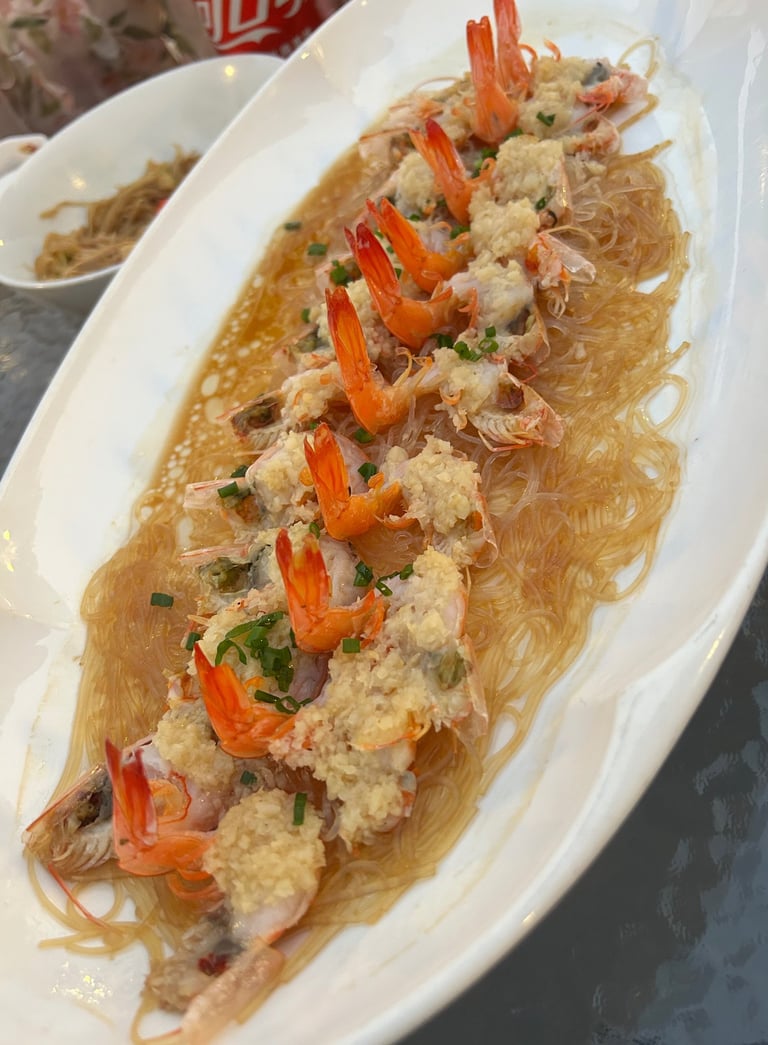
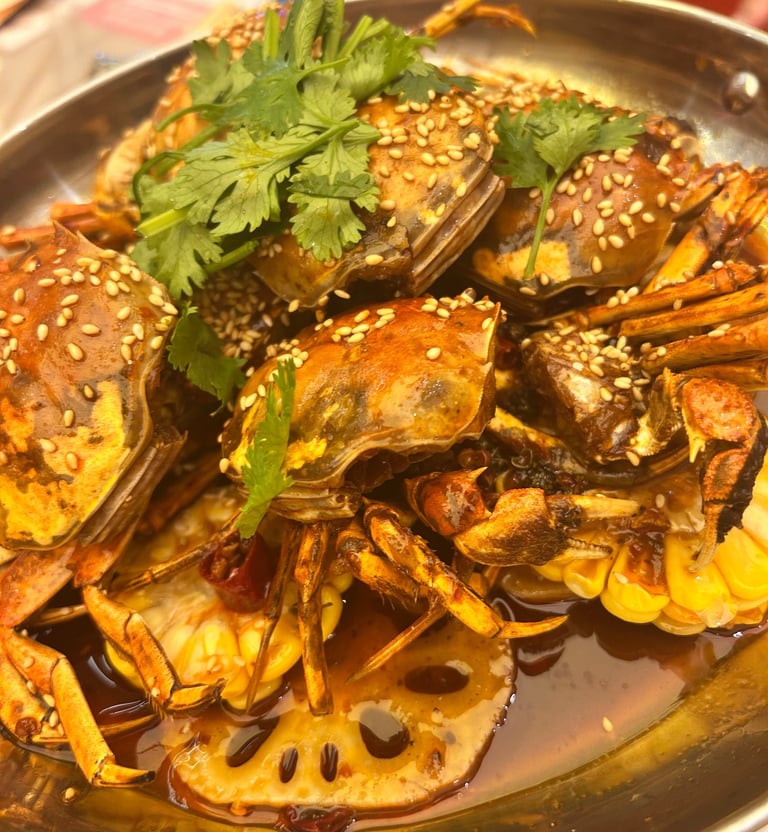
At lunch and dinner, you’ll find hearty dishes that reflect the city’s love of bold flavors. Take the claypot beef with peppers and onions in my photos — a dish that arrived sizzling, rich, and comforting. Or the garlic shrimp over glass noodles, a plate that made everyone at the table lean forward in anticipation.
Vegetable dishes shine too. Simple stir-fried greens, like those in my photo of garlicky shoots, balance heavier plates. Spicy pork with chilies brings heat and excitement. And playful snacks like fried pumpkin balls add joy to the table.
What makes these meals special isn’t just the taste — it’s the way they unfold. You sit down with friends, dishes start arriving, and conversation flows. There’s laughter, there’s debate, there’s clinking of bowls. It feels alive.
Night Markets: The Other Side of Wuhan
If mornings are for breakfast, evenings are for markets. Wuhan night markets are dazzling: lights strung across stalls, the hiss of grills, the perfume of skewered meats and frying dumplings.
Here, food feels like celebration. Locals wander in groups, trying different snacks, sipping cold drinks, bargaining, chatting, playing games. The vibe is young, energetic, and playful.
For me, it was a reminder of how balanced Wuhan is. Mornings are communal and efficient, evenings are festive and leisurely. The city seems to know how to pace itself.
Resilience Written in Flavors
It’s impossible to ignore that Wuhan has been through a lot. But what struck me was how invisible that weight felt when you were at a table full of food. People aren’t sitting in sadness. They’re living, laughing, eating, moving forward.
Every steaming bowl of noodles, every shared plate of fish, every night market skewer feels like a statement: life continues, joy continues, flavor continues.
Food here is resilience made edible.
My Return Journeys
I was in Wuhan last fall. I came back recently. And I’m going again next week. Why? Because the city has a way of drawing you back.
Part of it is the food — I can’t lie. Once you’ve had authentic hot dry noodles in the city that invented them, it’s hard to settle for anything else. But part of it is the people. Their warmth, their generosity, their laughter.
And part of it is the feeling. Wuhan is a city that feels alive in a way you can’t capture in photos or headlines. You have to sit there, at a breakfast stall at 7 a.m., noodles in front of you, steam on your face, and let the city hum around you. Only then will you understand
If you’ve never been to Wuhan, I hope you’ll consider it. Not because it’s exotic or unusual, but because it’s real. It’s a city that eats with joy, wakes up together, shares without hesitation, and proves every day that life is best lived around a table.
Forget the headlines. Forget the stereotypes. Go for the noodles. Go for the laughter. Go for the way a stranger will nudge the best bite of fish onto your plate.
Because Wuhan isn’t just a city. It’s an experience — compassionate, fun, and, above all, succulent.



Yellow Crane Tower: Standing in the Heart of Wuhan’s Soul
When you arrive in Wuhan, you can’t escape hearing about Yellow Crane Tower. For the people of this city, it isn’t just a landmark on Snake Hill. It’s poetry carved into wood, legend wrapped in tiles, and a symbol of endurance that rises above the Yangtze River with grace and pride.
For visitors like me, it’s a chance to step into history and walk inside a story that has been told and retold for more than 1,700 years.
The Climb to the Tower
The approach itself sets the mood. The path winds up Snake Hill, shaded with trees and dotted with smaller pavilions. The hum of the city fades as you climb, replaced by birdsong and the crunch of your footsteps. Every now and then, through branches, you glimpse a flash of yellow tiles or the red curve of an eave.
By the time you reach the base, anticipation has built. The tower doesn’t reveal itself all at once — it teases you, appearing in fragments until you’re suddenly standing before it, a five-story giant of color and detail.
Legends That Give the Tower Its Soul
Ask any Wuhanese about Yellow Crane Tower and they’ll likely mention the immortal on the yellow crane. According to legend, an otherworldly figure rode a golden-feathered crane to Snake Hill and vanished. Locals, enchanted, built a tower where he had departed. Some stories say the crane itself lingered, circling the tower for centuries before flying away for good.
Then came the poets. In the Tang Dynasty, the poet Cui Hao visited and wrote lines that would forever tie the tower to Chinese literature:
“The old-time folks have all departed by the Yellow Crane,
here all that remains is Yellow Crane Tower.”
Ever since, Yellow Crane Tower has been a place of verses, where scholars and travelers came to write, reflect, and leave their own words in the air. Though rebuilt many times after fire and war, the tower always rose again, carrying its legends upward like wings.
Architecture and Design
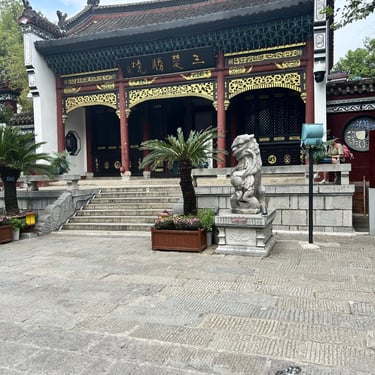
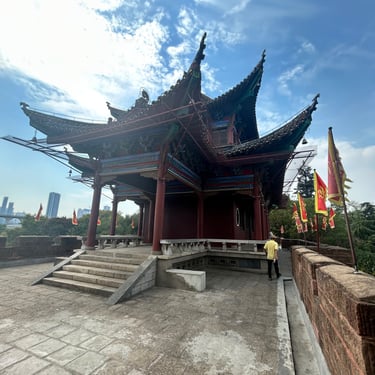
The current tower, rebuilt in 1985, stands five stories tall. Its golden tiles shine like a flame against the sky, its sweeping eaves curl upward like wings ready to take flight. From a distance, it feels timeless. Up close, it’s intricate: carved dragons, painted phoenixes, motifs of cranes in flight decorating every surface.
Inside, staircases spiral from floor to floor. Each level holds art, calligraphy, and exhibits telling the story of the tower’s past. Yet the real draw is not the displays but the act of climbing itself — moving higher, layer by layer, until you step out onto the balconies.
The View from the Top
From the highest floor, Wuhan stretches in every direction.
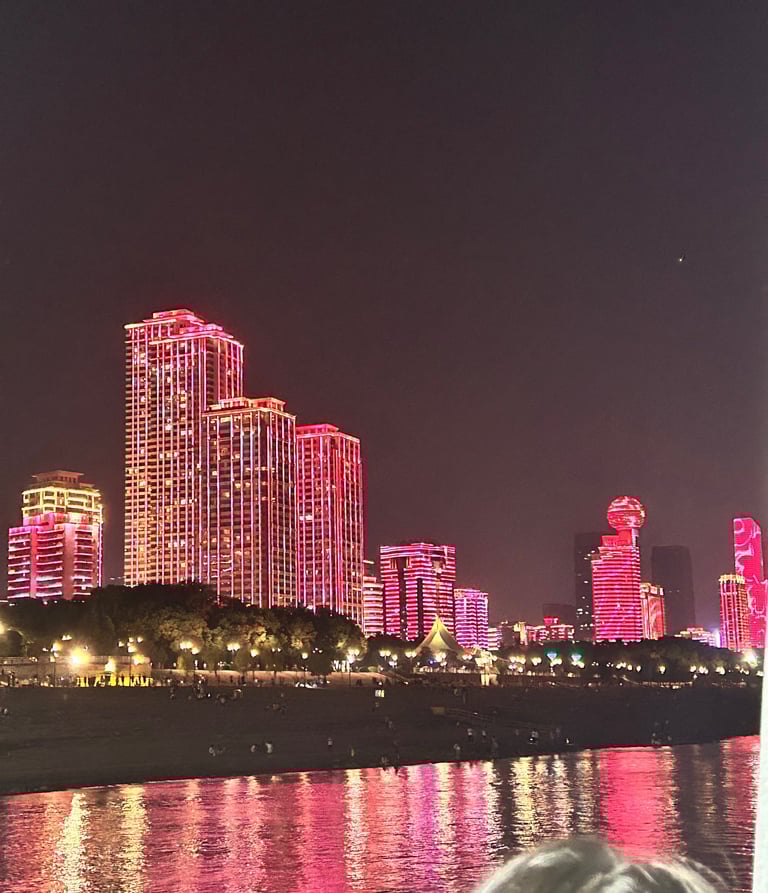
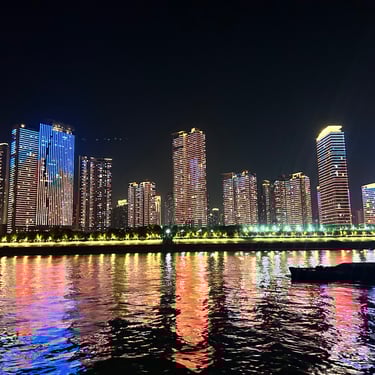
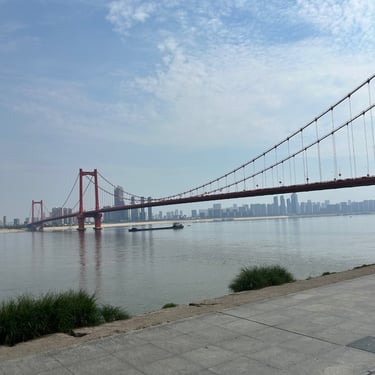
To the north and south flows the Yangtze River, broad and muddy, its barges and ferries constant reminders that this city lives with the river as its spine. To the west, the Wuhan Yangtze River Bridge cuts across the water — steel, strong, and proud, the city’s first major crossing. To the east, glass towers glint in the light, showing the modern face of Wuhan.
It’s not just the sightlines that matter. It’s the feeling. Standing on the balcony, leaning against the railing, you sense the weight of time. Generals, poets, revolutionaries, travelers — countless people stood here before you, looking at the same river, the same city, feeling small and infinite at once.
A Symbol for the City
Yellow Crane Tower is more than architecture. It’s the shorthand image of Wuhan. It appears in textbooks, songs, paintings, and even logos. Schoolchildren recite poems about it. Locals mention it with pride.
For Wuhan, the tower is proof of resilience. It has burned down, been rebuilt, destroyed in wars, and resurrected again and again. Each time, the city restored it, unwilling to let the symbol vanish. In that persistence lies a reflection of Wuhan itself: tested, misunderstood, but enduring.
When I told Wuhanese friends I was visiting the tower, their smiles said everything. It wasn’t just small talk. It was pride in knowing I would come face to face with the soul of their city.
The Experience Inside
Walking through Yellow Crane Tower is a sensory mix: the echo of footsteps on wood, the murmur of voices, the occasional call of a bird outside. Light filters through windows differently at every level — golden in the morning, sharp at noon, warm and crimson by sunset.
The air seems heavy with memory. Though the walls are modern, it feels as if centuries of incense, prayers, and poems still cling to them. On one floor, I paused by a window and looked down. The roofs below curved like waves, pathways stretched out like streams, and visitors moved through the grounds like flowing water.
In that moment, I realized Yellow Crane Tower isn’t just about height. It’s about perspective. It invites you to look outward at the city and inward at yourself at the same time.
Practical Travel Tips
Location: Wuchang District, on Snake Hill near the Yangtze.
Transport: Take Wuhan Metro Line 4 to Yellow Crane Tower Station or use a taxi.
Entry: Tickets are around 70 RMB. The price includes access to the tower and surrounding pavilions.
When to Visit: Mornings for calm, evenings for sunset. Spring and autumn bring the best weather.
Crowds: Expect them — this is Wuhan’s crown jewel. Still, the space is large enough to find quiet corners.
Pairing: From the tower, it’s a short walk to the Wuhan Yangtze River Bridge, another symbol worth crossing on foot.
Why It Matters
Yellow Crane Tower is not just a place you visit. It’s an encounter.
It’s an encounter with poetry, with history, with resilience, and with the present heartbeat of Wuhan. It shows you the city’s past and future in one sweep of the river. It connects you to centuries of travelers who stood where you stand, looked where you look, and felt what you feel.
When I left, walking down from Snake Hill back into the streets of Wuchang, I carried more than photos. I carried the sensation of having touched something essential. Like finishing a meal that was perfectly balanced — satisfying, nourishing, and unforgettable.
That is what Yellow Crane Tower offers. Not just a view, but a taste of Wuhan’s soul.